chevron_left
-
 play_arrow
Pro Radio Demo Top Music Radio
-
 play_arrow
London Calling Podcast Yana Bolder

Tina Turner
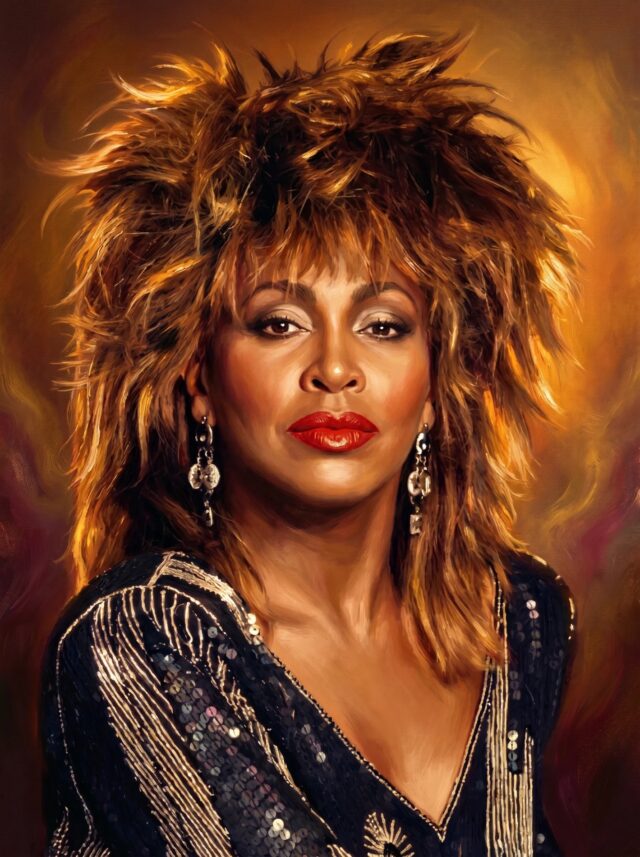
Queen of Rock and Roll
Entertainment
Tina Turner was an American born singer, songwriter, and actress who became one of the best selling recording artists of all time and a defining figure in the history of rock and soul music. Born Anna Mae Bullock in the rural farming community of Nutbush, Tennessee, Turner emerged from a childhood marked by poverty, family abandonment, and the systemic barriers of the Jim Crow South. Turner first achieved fame in the 1960s as the powerhouse lead vocalist of the Ike and Tina Turner Revue, delivering explosive live performances and recording landmark rhythm and blues hits before escaping a severely abusive marriage in 1976 with only thirty six cents to her name. Turner’s major achievements are anchored by an unprecedented mid career resurgence in the 1980s, widely considered the greatest comeback in music history. The 1984 release of the multi platinum album Private Dancer and the number one single "What's Love Got to Do with It" transformed Turner into a global solo superstar. Official sources credit Turner with twelve Grammy Awards, including a Grammy Lifetime Achievement Award, and recognition as a two time inductee into the Rock and Roll Hall of Fame. Turner’s professional credits also include starring roles in major motion pictures such as Mad Max Beyond Thunderdome and setting a Guinness World Record for the largest paying concert audience for a solo artist. Turner’s public importance extends far beyond musical innovation. By publicly disclosing the severe domestic violence endured during her first marriage, Turner broke a pervasive cultural silence, becoming a powerful symbol of survival and resilience for abused women worldwide. Furthermore, Turner shattered industry ageism and sexism, proving that a Black woman in her forties could dominate the global pop and rock charts. Turner’s later life included a commitment to Nichiren Buddhism, extensive philanthropic support for children's charities, and the publication of spiritual memoirs, cementing a legacy that stands at the intersection of artistic triumph and profound personal liberation.
"I didn't have anybody, really, no foundation in life, so I had to make my own way. Always, from the start. I had to go out in the world and become strong, to discover my mission in life."
Tina Turner, singer, songwriter, actress, author, and the Queen of Rock and Roll
Tina Turner, Anna Mae Bullock, Queen of Rock and Roll
November 26, 1939
May 24, 2023
Tina Turner was born Anna Mae Bullock on November 26, 1939, in Brownsville, Tennessee, to Zelma Priscilla Currie and Floyd Richard Bullock. Turner was African American and American, later relinquishing United States citizenship to become a citizen of Switzerland in 2013. Raised primarily in the rural unincorporated community of Nutbush, Tennessee, Turner grew up in a sharecropping family where her father worked as a farm overseer. Turner attended Flagg Grove Elementary School and later graduated from Sumner High School in St. Louis, Missouri, in 1958. Following high school, Turner briefly worked as a nurse's aide at Barnes-Jewish Hospital before pursuing a career in music. Turner became professionally active in 1958, making a first recording under the name Little Ann, and remained a dominant force in global music until officially retiring from performing in 2009. A decisive early career turning point occurred in 1960 when Turner recorded the lead vocal on the rhythm and blues track "A Fool in Love." The recording was a massive success, prompting bandleader Ike Turner to rename her Tina Turner and establish the Ike and Tina Turner Revue, launching a career that would span over five decades and fundamentally alter the trajectory of American rock and soul music.
Tina Turner’s personal life was characterized by profound hardship followed by hard won independence and enduring love. Turner was married twice: first to musician Ike Turner from 1962 until their divorce was finalized in 1978, and later to German music executive Erwin Bach, whom Turner married in 2013 after a twenty seven year relationship. Turner had four sons: Craig Raymond Turner, Ronald Renelle Turner, and two adopted sons from Ike Turner's previous relationship, Ike Turner Jr. and Michael Turner. Turner’s primary residences included Los Angeles, California, during the 1970s and 1980s, before permanently relocating to Europe in the mid 1990s, eventually settling at the Château Algonquin estate in Küsnacht, Switzerland. Beyond music, Turner was deeply committed to the practice of Nichiren Buddhism, which she credited with saving her life, and engaged in charitable work supporting organizations like the World Food Programme and UNICEF. Turner faced severe social, industry, and personal barriers throughout her life. Growing up in the segregated South, Turner navigated systemic racism and extreme economic deprivation. The most profound personal barrier was the severe physical, emotional, and financial abuse inflicted by Ike Turner during their sixteen year marriage. Turner endured broken bones, third degree burns, and psychological torment, which culminated in a suicide attempt in 1968. Furthermore, after escaping the marriage in 1976, Turner faced immense industry sexism and ageism, as record executives dismissed her as a nostalgic rhythm and blues act who was too old to achieve mainstream pop success. Turner responded to these challenges with extraordinary resilience. Turner overcame the abuse by fleeing the marriage with nothing but a Mobil credit card and thirty six cents, subsequently relying on food stamps and cleaning houses to survive while rebuilding a solo career from the ground up. Turner overcame industry ageism by adopting a rock oriented sound and securing management that positioned her alongside contemporary pop stars, leading to the historic Private Dancer comeback. Important places connected to Turner’s life include the Spring Hill Baptist Church in Nutbush, where early vocal talent was nurtured, and the Capitol Records studios, where the solo comeback was forged. Together, these locations reflect Turner’s journey from a marginalized youth to a global cultural figure who transformed personal trauma into a message of spiritual and artistic liberation. Tina Turner is most famous for executing the greatest career comeback in the history of popular music and defining the sound of stadium rock in the 1980s. After being dismissed by the music industry following a harrowing divorce, Turner returned at the age of forty four with the 1984 album Private Dancer. The album’s lead single, "What's Love Got to Do with It," became a global phenomenon, establishing Turner as a solo superstar capable of dominating both the pop and rock charts. This resurgence fundamentally changed industry perceptions regarding the commercial viability of older female artists and women of color in rock music. Turner is also remembered for an electrifying stage presence and unparalleled vocal power. During the 1960s and 1970s, Turner’s performances with the Ike and Tina Turner Revue set a new standard for live rhythm and blues, characterized by high energy choreography and raw, emotive vocals on tracks like "Proud Mary" and "River Deep – Mountain High." In the 1980s and 1990s, Turner translated this energy into massive stadium tours, becoming one of the most successful live performers in history and setting a Guinness World Record for concert attendance in Rio de Janeiro. Official sources credit Turner with numerous major awards and distinctions. Turner received twelve Grammy Awards, including the Grammy Lifetime Achievement Award in 2018. Turner was inducted into the Rock and Roll Hall of Fame twice: first with Ike Turner in 1991, and later as a solo artist in 2021. Additional recognitions include the Kennedy Center Honors in 2005 and a star on the Hollywood Walk of Fame. These honors matter because they recognize not only virtuosity and longevity, but Turner’s role in breaking racial and gender barriers while reshaping the landscape of international popular culture.
Tina Turner served as the lead vocalist and primary stage attraction for the Ike and Tina Turner Revue from 1960 to 1976. In this role, Turner was not simply a singer but the dynamic center of a highly disciplined rhythm and blues ensemble. Turner developed the complex, high speed choreography performed alongside the Ikettes and delivered vocals that bridged the gap between gospel fervor and hard rock. This leadership on stage transformed the Revue into one of the most formidable live acts of the era, directly influencing the performance styles of contemporaries like Mick Jagger and Janis Joplin. Turner also operated as a pioneering solo artist and international touring powerhouse. Following the 1984 comeback, Turner took absolute creative control over her career, selecting rock oriented material and collaborating with top tier producers. Turner directed the staging, costuming, and musical arrangements for massive global tours, including the Break Every Rule World Tour and the Twenty Four Seven Tour. This role mattered because Turner demonstrated that a female artist could successfully command the logistics and creative direction of multi million dollar stadium productions, a domain previously dominated almost exclusively by white male rock bands. Beyond the music industry, Turner took on the role of an author and spiritual advocate. Turner published three books, including the groundbreaking 1986 autobiography I, Tina, which publicly detailed the realities of domestic abuse, and the 2020 spiritual memoir Happiness Becomes You. In these roles, Turner functioned as a teacher and survivor, sharing the principles of Nichiren Buddhism that facilitated her personal survival. This public service role was significant because Turner leveraged celebrity to combat the stigma surrounding domestic violence, providing a vital blueprint for resilience and spiritual healing for millions of readers worldwide.
"River Deep – Mountain High" (1966) Produced by Phil Spector, this single utilized the famous "Wall of Sound" production technique, placing Turner’s maximum energy vocals over a massive orchestral arrangement. The recording mattered because it pushed Turner beyond traditional rhythm and blues into the realm of epic pop and rock. Although it underperformed in the United States, it was a massive hit in Europe and is now widely considered one of the greatest recordings in rock history, earning induction into the Grammy Hall of Fame. "Proud Mary" (1971) This radical reimagining of the Creedence Clearwater Revival song became the signature hit of the Ike and Tina Turner Revue. The arrangement, which famously started "nice and easy" before finishing "nice and rough," showcased Turner’s unparalleled vocal agility and stage energy. It was a professional milestone because it earned the duo a Grammy Award for Best R&B Vocal Performance by a Group and firmly established Turner as a premier interpreter of rock material. Public Disclosure of Domestic Abuse (1981) In a landmark interview with People magazine, Turner publicly revealed the severe physical and emotional abuse inflicted by Ike Turner. This disclosure was a major cultural milestone because speaking openly about intimate partner violence was virtually unheard of at the time. The revelation mattered because it shattered the silence surrounding domestic abuse, fundamentally changing public discourse and providing immense courage to survivors worldwide. Private Dancer (1984) Recorded in just two weeks, this fifth solo studio album marked Turner’s definitive return to the music industry. The album featured a sophisticated blend of rock, pop, and soul, yielding multiple hit singles including "What's Love Got to Do with It" and "Better Be Good to Me." The work was historically significant because it sold over ten million copies worldwide, won four Grammy Awards, and executed the most successful commercial comeback in music history, proving that a Black woman in her forties could dominate the MTV era. Mad Max Beyond Thunderdome (1985) Turner co-starred alongside Mel Gibson in this post apocalyptic blockbuster film, portraying the glamorous and ruthless Aunty Entity. The performance was a major professional milestone, as it proved Turner’s viability as a leading actress and introduced her to a new demographic of filmgoers. The role mattered because it solidified Turner’s status as a multi disciplinary global superstar, and the accompanying soundtrack provided two massive hit singles, including the Grammy winning "We Don't Need Another Hero." I, Tina: My Life Story (1986) Co-written with journalist Kurt Loder, this autobiography provided a harrowing and triumphant account of Turner’s life, from the cotton fields of Tennessee to global superstardom. The book was a milestone because it became an international bestseller and served as the basis for the acclaimed 1993 biographical film What's Love Got to Do with It. The memoir mattered because it reclaimed Turner’s narrative from the tabloids, establishing her permanently in the public consciousness as a symbol of ultimate survival.
Tina Turner sold over 100 million records worldwide, making the artist one of the best selling music artists of all time. Turner charted thirty five Top 40 hits in the United Kingdom and became the first female artist in UK chart history to score Top 40 hits in six consecutive decades, from the 1960s through the 2010s. Turner’s discography includes nine solo studio albums, three live albums, and extensive compilation releases. The 1984 release Private Dancer was certified five times Platinum in the United States and was added to the National Recording Registry at the Library of Congress in 2020 for its cultural and historical significance. Official sources credit Turner with twelve Grammy Awards, including eight competitive awards, three Grammy Hall of Fame inductions, and the Grammy Lifetime Achievement Award in 2018. Turner shares the record for the most awards given for Best Female Rock Vocal Performance, winning the category four times. Turner set a Guinness World Record in January 1988 when performing for approximately 180,000 people at the Maracanã Stadium in Rio de Janeiro, Brazil. At the time, this was the largest paying audience ever assembled for a concert by a solo artist, illustrating Turner’s unparalleled global drawing power. Turner was the first Black artist and the first woman to appear on the cover of Rolling Stone magazine, featured in the publication's second issue in 1967. This milestone reflected Turner’s early and undeniable impact on the emerging rock journalism landscape.
Tina Turner’s legacy is defined by the complete transformation of the role of women in rock and roll. By fusing the raw emotional power of rhythm and blues with the aggressive energy of rock music, Turner created a vocal and performance style that shattered genre boundaries. This structural shift influenced generations of musicians, from Mick Jagger, who studied Turner’s stage movements, to Beyoncé and Mary J. Blige, who adopted her blueprint for female empowerment on stage. Furthermore, Turner’s 1980s solo work proved that rock music was not the exclusive domain of young white men, ensuring that Black women reclaimed their foundational space within the genre. Beyond musical innovation, Turner left a profound impact on society through the courageous disclosure of domestic violence. By speaking openly about the abuse endured during her first marriage, Turner removed the stigma associated with intimate partner violence and shifted the cultural narrative from victimhood to survival. This transparency provided a vital lifeline for millions of abused women, fundamentally changing how the media, the legal system, and the public understand and discuss domestic abuse. Turner’s approach to aging and career longevity also established a vital precedent for the entertainment industry. By achieving peak commercial success and sex symbol status in her mid forties and continuing to sell out global stadium tours into her late sixties, Turner obliterated industry ageism. This enduring vitality paved the way for future generations of female artists to maintain demanding, high profile careers well beyond the traditional limits imposed by the pop music industry, making Turner a pioneer in both artistic endurance and personal liberation.
Official Website https://thetinaturner.com/ Official Instagram https://www.instagram.com/tinaturner/ Official Facebook https://www.facebook.com/TinaTurner/ Official YouTube https://www.youtube.com/channel/UCfBkblXPcSNt784AZz5J6AQ Britannica Biography https://www.britannica.com/biography/Tina-Turner
Bego, Mark. Tina Turner: Break Every Rule. Taylor Trade Publishing, 2005. Billboard. "Tina Turner Album and Singles Chart History." Accessed April 17, 2026. http://musicchartsarchive.com/artists/tina-turner Britannica. "Tina Turner." Accessed April 17, 2026. https://www.britannica.com/biography/Tina-Turner Grammy.com. "Tina Turner." Accessed April 17, 2026. https://grammy.com/artists/tina-turner/7641 Turner, Tina, and Kurt Loder. I, Tina: My Life Story. New York: William Morrow and Company, 1986. Turner, Tina. Happiness Becomes You: A Guide to Changing Your Life for Good. New York: Atria Books, 2020. Turner, Tina. My Love Story. New York: Atria Books, 2018. Wikipedia. "Tina Turner." Accessed April 17, 2026. https://en.wikipedia.org/wiki/Tina_Turner
Bego, Mark. Tina Turner: Break Every Rule. Taylor Trade Publishing, 2005. Cawthorne, Nigel, and Tina Turner. Tina Turner. London: Carlton Books, 1999. Kiersh, Edward. Tina Turner. New York: Simon & Schuster, 1985. Orth, Maureen. "Proud Tina." Vanity Fair, May 2004. Turner, Tina, and Kurt Loder. I, Tina: My Life Story. New York: William Morrow and Company, 1986. Turner, Tina. Happiness Becomes You: A Guide to Changing Your Life for Good. New York: Atria Books, 2020. Turner, Tina. My Love Story. New York: Atria Books, 2018.
More Information
Team LMio Foundation compendium listing for Tina Turner