chevron_left
-
 play_arrow
Pro Radio Demo Top Music Radio
-
 play_arrow
London Calling Podcast Yana Bolder

Billy Eckstine
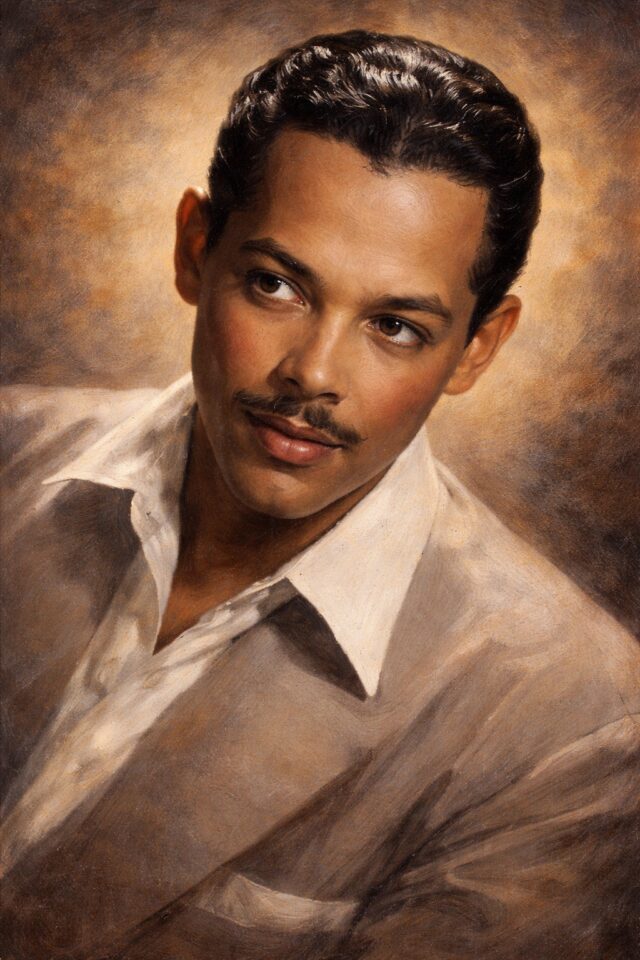
Architect of Bebop
Entertainment
Billy Eckstine was an American jazz singer and bandleader whose career joined commercial elegance with musical modernism. Born in Pittsburgh in 1914 and active from the swing era into the late twentieth century, Billy Eckstine became one of the first Black male vocal stars to command broad national popularity as a romantic balladeer while also leading a groundbreaking orchestra that served as a training ground for bebop. Britannica identifies Eckstine not only as a singer of major personal success but as a figure who fostered the careers of younger jazz musicians who would reshape the music. Eckstine’s orchestra of the mid 1940s included or helped launch artists such as Dizzy Gillespie, Charlie Parker, Miles Davis, Sarah Vaughan, Art Blakey, Dexter Gordon, and Fats Navarro. That fact alone places Billy Eckstine at the center of American music history: Eckstine was not merely a crooner with hits, but a bridge between big band infrastructure and the new harmonic language of modern jazz. At the same time, Billy Eckstine confronted racial barriers that restricted radio, film, and television opportunities for Black male romantic singers. Later commentary and historical reporting emphasized both the artistry and the structural exclusion, making Eckstine an important figure in the history of American performance, race, and mass culture.
“Maybe black male singers are not supposed to sing about love. You’re supposed to sing about hurt.”
William Clarence Eckstein, professionally Billy Eckstine; singer, bandleader, and musician.
Billy Eckstine; “Mr. B.”
July 8, 1914
March 8, 1993
Ethnicity and nationality African American; American. Eckstine’s career unfolded inside the segregated entertainment system of the United States and became historically significant in part because Billy Eckstine challenged stereotypes about the kind of public intimacy Black male singers were permitted to project. Where born Pittsburgh, Pennsylvania, United States. Education Eckstine attended schools in Pittsburgh and Washington, D.C., including study at Howard University before leaving to pursue music professionally after success in amateur performance. Time period in which active From the late 1930s until 1993, spanning swing, bebop, postwar popular song, and later jazz vocal revival contexts.
Billy Eckstine was born to William Eckstein and Charlotte Eckstein. Reference sources note family movement between Pittsburgh and Washington, D.C., during youth. Eckstine married twice, first to June Eckstine and later to actress and model Carolle Drake, with whom Billy Eckstine had four children, including music executives Ed Eckstine and Guy Eckstine. Residence and professional life centered on Pittsburgh, Washington, Chicago, New York, and touring circuits across the United States and abroad. Late life returned Eckstine to Pittsburgh, where Billy Eckstine died after health complications following a stroke. Personal interests are most clearly documented through performance life itself. Eckstine remained active in clubs and casinos for decades, and reporting on Billy Eckstine’s final years emphasized continuing commitment to live audiences rather than retirement from the stage.
Billy Eckstine is most famous for two historically distinct but equally important accomplishments. First, Billy Eckstine became one of the most successful Black male vocal stars of the postwar era, known for a refined bass baritone on hits such as “I Apologize,” “Prisoner of Love,” “Everything I Have Is Yours,” and “Fools Rush In.” Second, Billy Eckstine assembled one of the most consequential big bands in jazz history, a band that incubated bebop talent and gave institutional shape to a modern movement often remembered primarily through small group recordings. Recognition came both during life and after death. Billy Eckstine received a Grammy nomination for Billy Eckstine Sings With Benny Carter, received the Recording Academy’s Lifetime Achievement Award posthumously in 2019, and saw “I Apologize” enter the Grammy Hall of Fame. A Pennsylvania historical marker and continuing archival preservation reflect ongoing recognition of Eckstine’s place in American music history.
Eckstine first rose to notice as a vocalist and trumpeter with Earl Hines’s orchestra. That role mattered because Hines’s ensemble was already a meeting point for young modernists, and Billy Eckstine used influence within that environment to encourage the hiring of emerging innovators. In 1944, Eckstine formed the Billy Eckstine Orchestra. As bandleader, Billy Eckstine did more than front a successful ensemble: Eckstine created a laboratory in which bebop musicians gained experience, income, arranging opportunities, and exposure in a large ensemble setting. For Gillespie, Parker, Davis, Vaughan, Blakey, and others, the band functioned as a professional institution at a moment when bebop was not yet culturally secure. As solo vocalist, Eckstine became a leading interpreter of romantic popular song. Television appearances, club residencies, and recording contracts kept Billy Eckstine visible across several decades, even as racism limited broader media opportunities. Historical commentary has repeatedly emphasized that Black male romantic sophistication itself was treated as disruptive within mid century American commercial culture.
** The Billy Eckstine Orchestra (mid 1940s)** The orchestra is the central institutional achievement of Eckstine’s career. It helped transform bebop from an experimental style into a staffed, touring, arranged, and professionally legible movement. Many later giants of jazz passed through the ensemble. ** “A Cottage for Sale” and “Prisoner of Love”** These early charting records demonstrated that Billy Eckstine could balance jazz sophistication with mass audience appeal. They also showed that a Black male vocalist could dominate romantic repertoire without conforming to minstrel stereotypes or novelty expectations. ** “I Apologize” (1951)** This hit became one of Eckstine’s most enduring recordings and later entered the Grammy Hall of Fame. The recording’s afterlife confirms that Billy Eckstine’s commercial peak was not simply period success but part of a lasting American songbook legacy. ** Postwar MGM success** Britannica’s record of an award for 10 million MGM sales by 1952 indicates the scope of Eckstine’s mainstream popularity. That measurable sales mark undercuts any historical tendency to confine Billy Eckstine to niche jazz memory; Eckstine was a major popular star. ** No Cover, No Minimum (1960) and later recordings** This live album and subsequent recordings showed Eckstine’s adaptability in nightclub settings and later jazz vocal contexts. The 1986 collaboration Billy Eckstine Sings With Benny Carter brought a late career Grammy nomination and reaffirmed artistic standing among jazz elders.
Billy Eckstine received one competitive Grammy nomination and later a posthumous Lifetime Achievement Award from the Recording Academy in 2019. That combination reflects the distinction between awards season totals and long historical valuation. Historical marker and secondary historical record sources credit Billy Eckstine with 11 gold records and emphasize national importance as an African American jazz balladeer and bandleader. Even allowing for mid century record accounting differences, the figure indicates major commercial penetration. Billy Eckstine’s orchestra directly involved artists who later defined bebop, making Eckstine one of the rare singers whose legacy depends as much on institution building as on voice. In music history terms, Eckstine occupies a place between cultural entrepreneurship and performance excellence.
Billy Eckstine’s legacy operates on two levels. In jazz history, Eckstine helped give bebop an organizational home during its formative years, materially aiding musicians who transformed harmonic practice, improvisation, and ensemble language. In popular song history, Billy Eckstine broadened the emotional and social space available to Black male vocalists, insisting on romantic elegance at a time when American racism often rejected that image. Later singers and historians have treated Eckstine as both exemplar and cautionary figure: exemplar because the voice, diction, and stage presence were exceptional; cautionary because media racism constrained a career that might otherwise have extended further into film, radio, and television empire. Billy Eckstine remains essential to any serious history of jazz modernity and Black popular stardom.
https://www.grammy.com/artists/billy-eckstine/2289
More Information
Team LMio Foundation's Compendium listing for Billy Eckstine