chevron_left
-
 play_arrow
Pro Radio Demo Top Music Radio
-
 play_arrow
London Calling Podcast Yana Bolder

Clarence Pointer
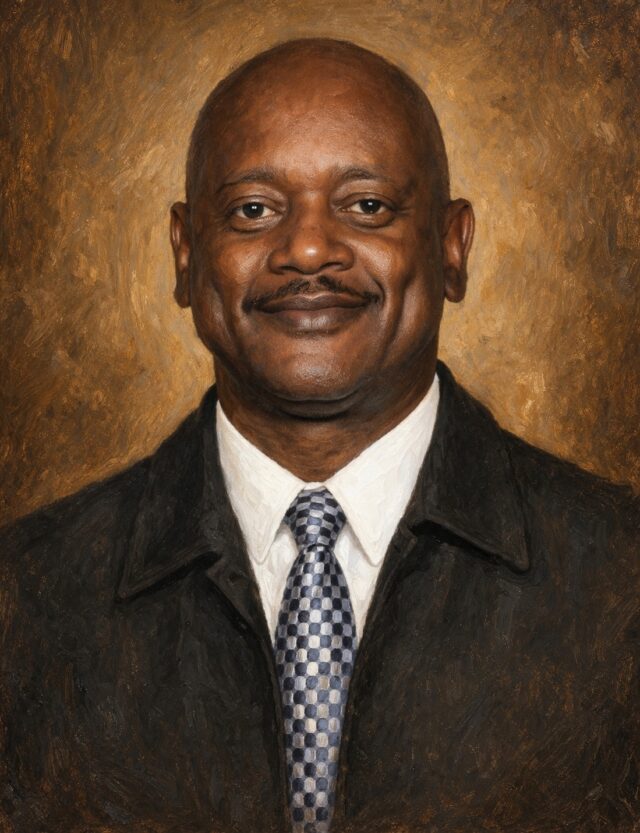
Famous Pencil Artist
Entertainment
Clarence J. Pointer, widely known as “Pencilman,” is an American pencil artist and Air Force veteran whose work centers on highly detailed portraiture, sports imagery, Black historical figures, entertainers, and public commissions. Public profiles identify Pointer as born in Hillsboro, Alabama, and developing an artistic practice largely without formal academic training. The record that does exist presents Pointer as a self fashioned artist whose public career grew through commissions, exhibitions, mentorship, and direct community engagement. Pointer’s public importance lies in the combination of technique, accessibility, and subject matter. Pointer has produced work depicting Rosa Parks, Martin Luther King Jr., Jackie Robinson, Barack Obama, Muhammad Ali, Bo Jackson, and many other figures associated with Black public history, sports, and entertainment. That focus places Pointer within a tradition of portrait artists whose work functions both as aesthetic production and as public memory work.
“I never drew stick figures like other kids. I just started drawing.”
Clarence J. Pointer
Clarence “Pencilman” Pointer.
Clarence Pointer was born in Hillsboro, Alabama. Several profiles state that Pointer developed artistic ability in childhood and did so without formal training, supported instead by family encouragement and long practice. One profile states that Pointer began drawing at age six and chose pencil in part because pencil was affordable, a telling detail about both material access and artistic resourcefulness. Public sources also identify military service in the Air Force, including time stationed in Okinawa, Japan.
Pointer’s documented personal interests are closely aligned with art production, Black history portraiture, sports iconography, public speaking, and artistic mentorship. Pointer’s own site also promotes an art mentorship program, indicating a personal commitment to coaching younger or developing artists rather than limiting the work to sales and commissions alone.
Clarence Pointer is most famous for hyper detailed pencil portraiture and for the public persona “Pencilman.” Pointer is especially associated with realistic renderings of athletes, musicians, actors, and civil rights figures. Media coverage and exhibition notices repeatedly emphasize works depicting Rosa Parks, Barack Obama, Bo Jackson, Kathleen Bradley, and other notable subjects, while Pointer’s own commercial catalog includes pieces on Martin Luther King Jr., Jackie Robinson, Simone Biles, Maya Angelou, Toni Morrison, and numerous sports figures. Pointer is also publicly remembered for a long arc of commissions and appearances. The public record notes a commissioned Rosa Parks drawing for a special presentation at Edwards Air Force Base in 1993, a 15 piece wall of legendary musical artists for former Los Angeles Rams wide receiver Willie “Flipper” Anderson in 1990, and exhibition invitations including Smokey Robinson’s celebrity golf event in 2005. These documented projects show that Pointer’s work circulated through community, celebrity, sports, and commemorative spaces rather than through one market alone.
Clarence Pointer’s principal role is visual artist, but Pointer has also functioned as arts presenter, keynote speaker, mentor, and entrepreneurial cultural producer. Local television coverage identifies Pointer as an Air Force veteran and keynote speaker at an art display event in California City. Pointer’s own website extends that public role through direct sales, branded merchandise, events, and structured art mentorship. Pointer’s mentorship role is especially important because Pointer offers guided criticism, project review, and advice on artistic growth, marketing, and networking. That activity places Pointer in a lineage of community based artists who do not separate personal success from the cultivation of later talent.
A major early milestone in the documented public record is the 1990 commission for Willie “Flipper” Anderson, consisting of an entire wall of legendary musical artists. The project mattered because it demonstrated large scale trust in Pointer’s portrait skill and connected the work to a professional athlete’s cultural space rather than a conventional gallery alone. Another major milestone was the 1993 commissioned drawing of Rosa Parks for a special presentation at Edwards Air Force Base. This commission is significant because Rosa Parks occupies a foundational place in the public memory of the civil rights movement, and commissioned portraiture of such a figure participates in the preservation and ceremonial presentation of Black historical memory. A later milestone was invitation to showcase work at Smokey Robinson’s first annual celebrity golf tournament in 2005. That appearance indicates recognition beyond local circles and places Pointer’s work in a celebrity event context tied to music industry prestige and philanthropic visibility. Pointer’s website documents an extensive body of later work in limited edition prints and originals, including portrayals of Jackie Robinson, Rev. Dr. Martin Luther King Jr., Simone Biles, Maya Angelou, Toni Morrison, Bryce Young, Cam Newton, Kobe Bryant, Muhammad Ali, and others. The range matters because it shows Pointer building an archive of Black achievement, sports excellence, and cultural memory through pencil portraiture. Pointer’s 2025 Pencilman Vol. 1 publication, offered through Pointer’s official site as an autographed collector’s item, represents another professional milestone by moving Pointer’s work into book form and framing the broader project as inspirational as well as commercial.
Public profiles identify Clarence Pointer as an Air Force veteran. That fact is historically relevant because military service, including time stationed in Okinawa, is cited as part of the formation of Pointer’s professional discipline and artistic maturation. Pointer’s public biography repeatedly states that Pointer had no formal art training. The significance lies in the fact that Pointer’s reputation was built through self directed practice, commission work, and sustained public presentation rather than through academy credentials. Documented commissions include the 1993 Rosa Parks presentation drawing and the 1990 15 piece music wall for Willie “Flipper” Anderson. These are not merely anecdotes; they are evidence of trust placed in Pointer for culturally symbolic and large scale work. Pointer operates an official website that includes prints, original works, events, branded merchandise, and a mentorship program. That breadth shows Pointer functioning as both artist and self managed cultural enterprise.
Clarence Pointer’s legacy is rooted in representation through portraiture. By choosing subjects such as Rosa Parks, Martin Luther King Jr., Jackie Robinson, Maya Angelou, Toni Morrison, Barack Obama, and major athletes, Pointer uses pencil art to keep Black historical and cultural memory present in accessible visual form. Pointer’s work therefore belongs not only to personal expression, but also to commemorative practice. Pointer’s impact also includes mentorship and public encouragement. Through exhibitions, speaking appearances, and direct coaching, Pointer offers a model of artistic development outside traditional gatekeeping structures. That model matters especially for emerging artists who see in Pointer’s career a path built from discipline, public outreach, and self determined craft.
http://ClarencePointer.net
More Information
Team LMio Foundation Compendium listing for Clarence Pencilman Pointer