chevron_left
-
 play_arrow
Pro Radio Demo Top Music Radio
-
 play_arrow
London Calling Podcast Yana Bolder

Herbie Hancock
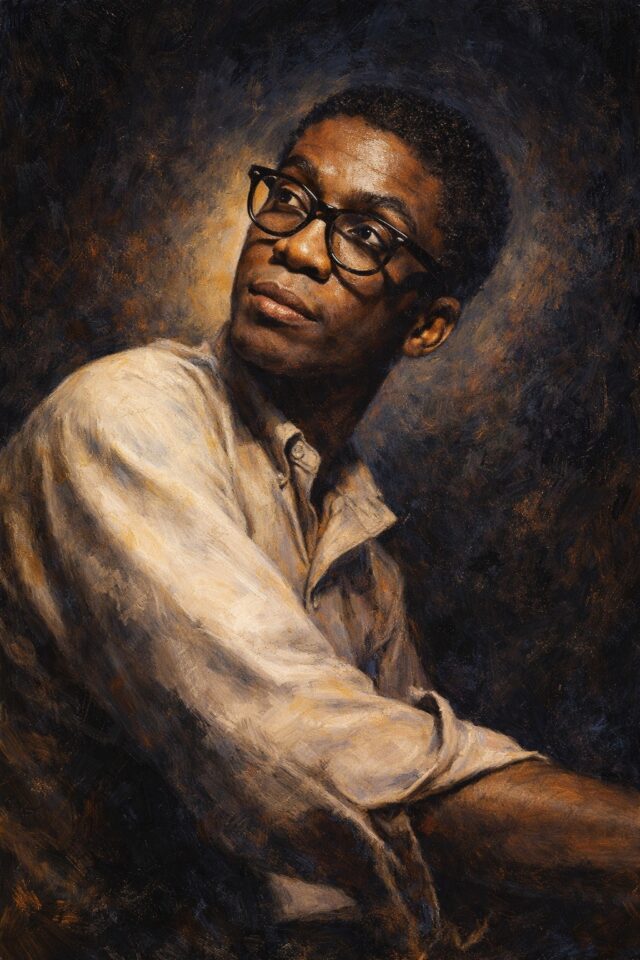
Jazz Innovator and Composer
Entertainment
Herbie Hancock is an American pianist, keyboard player, composer, bandleader, educator, and cultural ambassador whose career has helped define post bop, jazz fusion, jazz funk, and modern crossover jazz. Born in Chicago on April 12, 1940, Hancock emerged as a child prodigy, performed Mozart with the Chicago Symphony Orchestra at age eleven, studied both music and electrical engineering, and entered professional jazz at the start of the 1960s. Hancock’s early Blue Note recordings, work with Miles Davis’s Second Great Quintet, and later experiments with electric keyboards and studio technology made Hancock one of the most influential musicians of the modern era. Hancock’s major achievements span several distinct musical worlds. Hancock composed modern jazz standards such as “Watermelon Man,” “Cantaloupe Island,” “Maiden Voyage,” and “Chameleon,” helped redefine the role of the jazz rhythm section in the Miles Davis ensemble of the mid 1960s, and created landmark albums such as Takin’ Off, Empyrean Isles, Maiden Voyage, Head Hunters, Future Shock, and River: The Joni Letters. Hancock’s work brought together acoustic jazz, funk, electronics, world music, and pop collaboration without abandoning improvisational depth. Official and institutional sources credit Hancock with 14 Grammy Awards, including Album of the Year for River: The Joni Letters, making Hancock one of the rare jazz artists to receive one of the Recording Academy’s top general field honors. Hancock’s public importance extends beyond performance and composition. Hancock serves as Chairman of the Herbie Hancock Institute of Jazz, has worked as a UNESCO Goodwill Ambassador since 2011, has taught at UCLA, and has used public work in music, education, and international cultural dialogue to connect jazz with peace building, youth development, and global citizenship. Hancock’s career therefore stands at the intersection of artistry, education, technology, and public service.
“I try to practice with my life.”
Herbert Jeffrey Hancock, pianist, composer, bandleader, educator, and cultural ambassador
Herbie Hancock
April 12, 1940
Still alive
Herbie Hancock was born on April 12, 1940, in Chicago, Illinois, to Winnie Belle Hancock and Wayman Edward Hancock. Hancock is African American and American. Hancock began studying piano at age seven, received classical training, and quickly showed extraordinary technical ability. At age eleven, Hancock performed the first movement of a Mozart piano concerto with the Chicago Symphony Orchestra, an event widely cited in official and reference biographies as evidence of Hancock’s early prodigious talent. Hancock attended Hyde Park High School in Chicago and later studied at Grinnell College, where Hancock pursued both music and electrical engineering. That combination proved historically important. Hancock’s later comfort with synthesizers, studio technology, and electronic instruments did not emerge as a novelty detached from earlier training. Hancock’s college education helped cultivate a technical curiosity that later informed some of the most important music of the fusion and electronic eras. Hancock became professionally active in the early 1960s and remains active in performance, recording, composition, education, and cultural work in the twenty first century. A decisive early career turning point came when trumpeter Donald Byrd brought Hancock to wider attention. Hancock then entered the Blue Note recording world and, in 1963, joined Miles Davis’s Second Great Quintet with Ron Carter, Tony Williams, and later Wayne Shorter. That ensemble is central to jazz history because the group expanded the rhythmic and harmonic freedom of small group jazz without abandoning form, pulse, or collective cohesion. Hancock’s role in that transformation was foundational.
Herbie Hancock has been married to Gigi Hancock since 1968. Official biographical material states that Hancock and Gigi met in 1964 in a New York jazz club and later built a long marriage centered in Beverly Hills, California. The couple has one child, Jessica Hancock, who has worked in international publicity for the Hancock organization. Official family material also describes Gigi and Jessica as active in philanthropy and advocacy connected to environmental, human rights, and common good concerns. Hancock’s personal life includes major spiritual and civic commitments. Official biographical material states that Hancock actively promotes Buddhism with friends in SGI, presenting spiritual practice as part of a broader ethic of self development, compassion, and service. Hancock also co founded BAYCAT, an organization that supports underserved youth and young adults through education, employment, and digital media training. These commitments matter because Hancock’s public identity has long linked musical excellence to ethical growth, education, and cross cultural understanding. Hancock has also faced personal hardship. Public biographical sources note the death of Hancock’s sister Jean Hancock in the Delta Air Lines Flight 191 crash in 1985. Hancock’s memoir and publisher materials also state that Hancock struggled with crack cocaine addiction in the 1990s before achieving sobriety. These experiences belong in the historical record because Hancock’s life has not been a simple arc of uninterrupted acclaim. Hancock’s long career includes grief, addiction, recovery, and sustained recommitment to family and work. Important places and symbols connected to Hancock’s life include Chicago, where musical training began, New York, where Hancock entered elite jazz circles, Beverly Hills, where Hancock’s family life has been centered in recent decades, the piano and later the electric keyboard and synthesizer, and institutions such as Blue Note Records, UCLA, UNESCO, and the Herbie Hancock Institute of Jazz. Together these places and institutions reflect Hancock’s unusual position as both modern jazz master and global cultural figure.
Herbie Hancock is most famous for redefining modern jazz piano, helping build jazz fusion, and bringing jazz into sustained dialogue with funk, electronics, and popular music. Hancock’s work with the Miles Davis Second Great Quintet changed how a rhythm section could function. Rather than serving only as accompaniment, Hancock helped create a more interactive, harmonically open, and rhythmically elastic ensemble language. That contribution influenced generations of pianists, drummers, bassists, and composers working in jazz and beyond. Hancock is also remembered for a remarkable string of compositions and recordings that achieved both artistic and public resonance. “Watermelon Man” became an early hit and a standard. “Cantaloupe Island” and “Maiden Voyage” became core modern jazz repertoire. Head Hunters turned jazz funk into a mass audience phenomenon, while “Rockit” and Future Shock brought turntablism, synthesizers, and music video experimentation into mainstream view during the 1980s. River: The Joni Letters later made Hancock the first jazz musician in decades to win Album of the Year at the Grammys. Hancock’s distinctions and recognitions are equally significant. Official sources credit Hancock with 14 Grammy Awards, the 2004 NEA Jazz Masters honor, the 2013 Kennedy Center Honor, the 2011 UNESCO Goodwill Ambassador appointment, and the 2025 Polar Music Prize. These honors matter because they recognize not only virtuosity or longevity, but Hancock’s role in reshaping musical language across jazz, funk, electronic music, education, and international culture.
Herbie Hancock served as a Blue Note recording artist and bandleader in the early 1960s, releasing albums that quickly established Hancock as one of the most original pianists of the period. In this role, Hancock was not simply a soloist making tasteful jazz records. Hancock became a composer of durable repertoire and a central participant in one of the most important label communities in jazz history. Blue Note sessions placed Hancock among leading improvisers of the era and helped carry modern jazz into a more harmonically adventurous and compositionally refined phase. Hancock then became pianist in Miles Davis’s Second Great Quintet, one of the defining working groups in postwar jazz. That role mattered historically because the quintet transformed ensemble interaction. Hancock’s comping, voicings, and rhythmic placement loosened the old accompanist model and created a more equal conversational structure among players. The effect was felt across later small group jazz, where pianists increasingly approached accompaniment as composition in real time. As leader of the Mwandishi ensembles and later the Headhunters, Hancock became a pioneer of jazz fusion and jazz funk. In those roles Hancock combined electric keyboards, synthesizers, funk rhythm, studio craft, and improvisation with an ambition that was both musical and industrial. Hancock demonstrated that serious jazz musicians could reach wider audiences without surrendering invention. That shift affected record labels, concert programming, radio formats, and the future of Black instrumental music in the 1970s. Hancock has also served as Chairman of the Herbie Hancock Institute of Jazz, formerly the Thelonious Monk Institute of Jazz. Official biographies state that Hancock supports all aspects of the Institute’s work, leads tours, serves on judging panels for the International Jazz Piano Competition, co hosts major events, and helps select young artists for the Institute’s full scholarship college program. This role matters because Hancock’s influence is not limited to recordings and concerts. Hancock has helped shape jazz education, mentorship, and global outreach infrastructure for younger generations. Since 2011, Hancock has served as a UNESCO Goodwill Ambassador for Intercultural Dialogue. UNESCO states that the appointment recognized Hancock’s dedication to peace through dialogue, culture, and the arts. In practical terms, that role has involved representing the cultural value of jazz, participating in international dialogue, and helping link music to global education and heritage initiatives. Hancock’s importance here lies in treating jazz as both an art form and a civic language of human connection. Hancock has also held an educational role at UCLA, where official sources describe Hancock as a professor and artist in residence connected to the Herb Alpert School of Music and Institute programs. This role matters because Hancock’s career has become a channel through which advanced musical knowledge, improvisational philosophy, and global artistic values are transmitted directly to students rather than only preserved through recordings.
Takin’ Off from 1962 was Hancock’s debut album as a leader for Blue Note and introduced “Watermelon Man,” a composition that quickly became a hit and entered the modern jazz standard repertory. The recording mattered because it announced Hancock as both composer and pianist of unusual clarity, swing, and melodic intelligence, while also showing that Hancock could write material with strong crossover appeal. Empyrean Isles from 1964 included “Cantaloupe Island,” one of Hancock’s most enduring compositions. The piece became historically important not only within jazz performance but also in later popular culture, sampling culture, and educational repertory. Its compact groove and memorable harmonic profile helped make Hancock one of the rare modern jazz composers whose instrumental themes entered wide public recognition. Maiden Voyage from 1965 stands among Hancock’s most celebrated albums and title compositions. The work mattered because Hancock fused modal harmony, atmosphere, and ensemble lyricism into a recording that became both a jazz landmark and a pedagogical classic. The title track has been performed, studied, and recorded by generations of musicians, making the album one of Hancock’s clearest contributions to the core language of modern jazz. Hancock’s years with the Miles Davis Second Great Quintet from the mid 1960s constituted a major professional milestone of collective rather than individual authorship. In that ensemble, Hancock participated in recordings and performances that reimagined pulse, harmony, and interaction. The quintet’s influence reached far beyond sales or awards. Musicians, critics, educators, and later historians have treated the group as one of the central laboratories of post bop innovation. The Mwandishi period and electronic experiments of the early 1970s marked Hancock’s transition into a new sonic world. Hancock’s embrace of electric piano, synthesizer, and studio exploration mattered because it helped legitimize electronic instruments within serious improvisational music. This development opened creative pathways for later jazz fusion, progressive funk, and experimental electronic music. Head Hunters from 1973 was one of Hancock’s most consequential recordings. The Library of Congress essay on the album states that the record charted a new course by creating jazz that audiences could dance to while preserving sophistication and invention. The album’s success mattered across several industries. It broadened jazz’s commercial audience, strengthened the market for jazz funk, influenced later funk and soul musicians, and became an important resource for hip hop producers and sample based music. Within Head Hunters, “Chameleon” became one of Hancock’s signature works. The piece mattered because its bass line, layered groove, and spacious structure demonstrated how repetition, improvisation, and rhythmic design could coexist at a very high level. The track became one of the defining statements of jazz funk and one of the most recognizable instrumental grooves in modern music. Future Shock from 1983 and the single “Rockit” marked another turning point. Official award materials list “Rockit” among Hancock’s award winning works, and the recording became a landmark in the meeting of jazz, electro, hip hop aesthetics, turntablism, and music video culture. Its significance lies in how decisively Hancock entered the visual and technological language of the 1980s while still acting as an innovator rather than a follower of trends. ’Round Midnight from 1986 connected Hancock to film scoring at a high artistic level. The soundtrack expanded Hancock’s profile in cinema and demonstrated that Hancock’s compositional voice could function effectively in narrative film as well as the concert stage and recording studio. River: The Joni Letters from 2007 was one of Hancock’s late career triumphs. The album won Album of the Year at the Grammy Awards, a rare achievement for a jazz recording in the general field. That milestone mattered because it confirmed Hancock’s continuing relevance decades after the first Blue Note records and showed that interpretive, collaborative jazz could still command major institutional recognition at the highest level of the recording industry. The Imagine Project from 2010 extended Hancock’s global collaborative approach, bringing together musicians from multiple countries and traditions. Official materials describe the project as recorded in several countries with artists from around the world. The milestone matters because it reflects Hancock’s mature artistic philosophy, one centered on dialogue, border crossing, and cultural exchange rather than stylistic confinement. Hancock’s memoir, Herbie Hancock: Possibilities, published in 2014, is an important professional and intellectual milestone. The book places Hancock’s own reflections on creativity, spirituality, technology, race, collaboration, addiction, and musical discovery into the historical record. For scholars and general readers alike, the memoir functions as both autobiography and artistic philosophy.
Herbie Hancock has won 14 Grammy Awards, according to official artist and biography pages. That figure is historically significant because Hancock’s awards span different eras and different kinds of work, including straight ahead jazz, crossover projects, and collaborative recordings. Few jazz musicians have sustained that level of institutional recognition across so many decades. River: The Joni Letters won Album of the Year at the Grammy Awards. That result matters because the top Grammy categories are rarely won by jazz recordings. The award signaled a high level of mainstream institutional recognition for an artist whose reputation had already been secured within jazz history long before the album’s release. Hancock was named an NEA Jazz Master in 2004. The National Endowment for the Arts reserves that distinction for figures whose lifetime achievement has had deep national significance in jazz. Receipt of that honor places Hancock within the official cultural canon of the United States. Hancock received the Kennedy Center Honor in 2013. That recognition is important because the Kennedy Center Honors celebrate lifetime contribution to American culture across the performing arts, not merely commercial success or technical excellence within a single genre. Hancock was appointed UNESCO Goodwill Ambassador for Intercultural Dialogue in 2011. UNESCO explicitly linked the appointment to promotion of peace through culture and the arts, giving Hancock a formal role within an international organization rather than an honorary title disconnected from broader civic work. Hancock serves as Chairman of the Herbie Hancock Institute of Jazz and has led dozens of Institute tours that have introduced millions of people to jazz and its history, according to the Institute’s official biography. That fact demonstrates measurable educational and outreach influence beyond recordings, awards, and concert appearances. The Library of Congress added Head Hunters to the National Recording Registry in 2007. That inclusion matters because the Registry recognizes recordings of enduring cultural, historical, or aesthetic importance in the United States. The selection confirms that Head Hunters is not only commercially influential but also a nationally significant cultural artifact. The 2025 Polar Music Prize honored Hancock as one of that year’s laureates. The prize is one of the major international honors in music, and the official citation placed Hancock’s career in a global lineage of pathbreaking musical achievement.
Herbie Hancock’s legacy in music rests on a rare combination of technical mastery, compositional strength, stylistic courage, and cultural reach. Hancock helped reshape modern jazz piano, transformed the function of the rhythm section in one of jazz’s greatest ensembles, and then expanded the vocabulary of jazz through electric instruments, funk groove, studio experimentation, and cross genre collaboration. Because Hancock achieved major innovations in more than one era, Hancock’s influence is unusually broad. Pianists, keyboardists, producers, improvisers, and composers across jazz, funk, R&B, hip hop, film, and electronic music continue to work in terrain that Hancock helped create. Hancock’s lasting effect also extends into education and civic culture. Through UNESCO, UCLA, and the Herbie Hancock Institute of Jazz, Hancock has treated jazz as a language of dialogue, learning, and international human connection. That broader public role matters because it enlarges the meaning of artistic achievement. Hancock’s career demonstrates that a musician can shape not only sound, but also institutions, educational pathways, and the moral imagination attached to culture itself.
Official Website https://www.herbiehancock.com Official Biography https://www.herbiehancock.com/biography/ Official Discography https://www.herbiehancock.com/music/discography/ Official Newsletter https://www.herbiehancock.com/newsletter/ Official Instagram https://www.instagram.com/herbiehancockofficial/ Herbie Hancock Institute of Jazz https://hancockinstitute.org/meet/herbie-hancock/ UCLA Herb Alpert School of Music profile https://schoolofmusic.ucla.edu/people/herbie-hancock/ Encyclopaedia Britannica profile https://www.britannica.com/biography/Herbie-Hancock GRAMMY artist profile https://www.grammy.com/artists/herbie-hancock/9477 National Endowment for the Arts profile https://www.arts.gov/honors/jazz/herbie-hancock
American Masters. “Herbie Hancock.” PBS. Accessed April 15, 2026. https://www.pbs.org/wnet/americanmasters/ Britannica. “Herbie Hancock.” Accessed April 15, 2026. https://www.britannica.com/biography/Herbie-Hancock GRAMMY.com. “Herbie Hancock.” Accessed April 15, 2026. https://www.grammy.com/artists/herbie-hancock/9477 Hancock, Herbie. “Awards.” Herbie Hancock Official Website. Accessed April 15, 2026. https://www.herbiehancock.com/biography/awards/ Hancock, Herbie. “Biography.” Herbie Hancock Official Website. Accessed April 15, 2026. https://www.herbiehancock.com/biography/ Hancock, Herbie. “Biography Full Page.” Herbie Hancock Official Website. Accessed April 15, 2026. https://www.herbiehancock.com/biography-full-page/ Hancock, Herbie. “Contacts.” Herbie Hancock Official Website. Accessed April 15, 2026. https://www.herbiehancock.com/contacts/ Hancock, Herbie. “Discography.” Herbie Hancock Official Website. Accessed April 15, 2026. https://www.herbiehancock.com/music/discography/ Hancock, Herbie. “Herbie on Instagram.” Herbie Hancock Official Website, November 16, 2015. https://www.herbiehancock.com/2015/11/16/herbie-on-instagram/ Hancock, Herbie. “Life.” Herbie Hancock Official Website. Accessed April 15, 2026. https://www.herbiehancock.com/biography/life/ Hancock Institute of Jazz. “Herbie Hancock.” Accessed April 15, 2026. https://hancockinstitute.org/meet/herbie-hancock/ HistoryMakers. “Herbie Hancock’s Biography.” Accessed April 15, 2026. https://www.thehistorymakers.org/biography/herbie-hancock Kennedy Center. “Herbie Hancock.” Accessed April 15, 2026. https://www.kennedy-center.org/artists/h/ha-hn/herbie-hancock/ Library of Congress. “Head Hunters.” National Recording Registry. Accessed April 15, 2026. https://www.loc.gov/programs/national-recording-preservation-board/recording-registry/ complete-national-recording-registry-listing/ Library of Congress. Gluck, Bob. “Head Hunters.” Accessed April 15, 2026. https://www.loc.gov/static/programs/national-recording-preservation-board/documents/ headhunters.pdf National Endowment for the Arts. “Herbie Hancock.” Accessed April 15, 2026. https://www.arts.gov/honors/jazz/herbie-hancock Penguin Random House. Herbie Hancock: Possibilities. Accessed April 15, 2026. https://www.penguinrandomhouse.com/books/313520/herbie-hancock-possibilities-by-herbie- hancock-with-lisa-dickey/ Polar Music Prize. “Herbie Hancock.” Accessed April 15, 2026. https://www.polarmusicprize.org/laureates/herbie-hancock/ UCLA Herb Alpert School of Music. “Herbie Hancock.” Accessed April 15, 2026. https://schoolofmusic.ucla.edu/people/herbie-hancock/ UNESCO. “Herbie Hancock: The Roots of Jazz Are in Humanity.” Accessed April 15, 2026. https://www.unesco.org/en/articles/herbie-hancock-roots-jazz-are-humanity
Davis, Miles. Miles: The Autobiography. New York: Simon and Schuster, 1989. Gluck, Bob. You’ll Know When You Get There: Herbie Hancock and the Mwandishi Band. Chicago: University of Chicago Press, 2012. Hancock, Herbie, with Lisa Dickey. Herbie Hancock: Possibilities. New York: Viking, 2014. https://www.penguinrandomhouse.com/books/313520/herbie-hancock-possibilities-by-herbie- hancock-with-lisa-dickey/ National Endowment for the Arts. “Herbie Hancock.” https://www.arts.gov/honors/jazz/herbie-hancock UNESCO. “Herbie Hancock: The Roots of Jazz Are in Humanity.” https://www.unesco.org/en/articles/herbie-hancock-roots-jazz-are-humanity Uslan, Rachel, and Marc Myers, eds. WBGO Presents A Century of Jazz in 365 Days. New York: Weldon Owen, 2019.
More Information
Team LMio Foundation Compendium Listing for Herbie Hancock